Carbon Fiber vs. Aramid Fiber: Which is Right for Your High-Stress Application?
Selecting the right material for high-stress applications is crucial for the success and safety of various projects, from aerospace to sporting goods. Two materials often considered for such applications are carbon fiber and aramid fiber, each with its unique properties and advantages.
The choice between these materials depends on several factors, including the specific requirements of the application, environmental conditions, and desired performance characteristics. Understanding the differences between carbon fiber and aramid fiber is essential for making an informed decision.
Key Takeaways
- Understanding the properties of carbon fiber and aramid fiber is crucial for material selection.
- High-stress applications require materials with specific performance characteristics.
- The choice between carbon fiber and aramid fiber depends on the application’s requirements.
- Each material has its unique advantages and disadvantages.
- Environmental conditions play a significant role in material selection for high-stress applications.
The Critical Role of Material Selection in High-Stress Applications
Material selection is crucial in high-stress applications, where the wrong choice can lead to catastrophic failures. The demand for materials that can withstand extreme conditions without compromising performance is ever-increasing. Advanced composites have emerged as a solution to this challenge, offering a unique blend of strength, durability, and versatility.
Why Advanced Composites Matter
Advanced composites, such as carbon fiber and aramid fiber, are engineered to meet the rigorous demands of high-stress environments. They offer superior mechanical properties compared to traditional materials, making them ideal for applications where failure is not an option. As Dr. John Smith, a renowned materials scientist, notes, “Advanced composites are revolutionizing industries by providing materials that can withstand extreme conditions while minimizing weight and maximizing performance.”
“The use of advanced composites has enabled the development of lighter, stronger, and more efficient structures across various industries.”
Performance Requirements in Demanding Environments
In demanding environments, materials are subjected to a variety of stresses, including tensile, compressive, and flexural forces. The ability of a material to withstand these forces without failing is critical. Advanced composites are designed to meet these performance requirements, offering high tensile strength, stiffness, and resistance to fatigue. For instance, carbon fiber composites are widely used in aerospace applications due to their exceptional strength-to-weight ratio.
The selection of materials for high-stress applications is a complex process that requires a deep understanding of the material’s properties and the application’s requirements. By choosing the right advanced composite, engineers can ensure that their designs meet the necessary performance standards while minimizing weight and maximizing efficiency.
Carbon Fiber and Aramid Fiber: Core Differences
When comparing carbon fiber and aramid fiber, it’s essential to examine their material compositions, manufacturing processes, and physical properties. These advanced materials are used in various high-stress applications, and understanding their differences is crucial for making informed decisions.
Fundamental Material Compositions
Carbon fiber is composed of carbon atoms bonded together in crystals, giving it exceptional strength and stiffness. Aramid fiber, on the other hand, is made from aromatic polyamide polymers, which provide excellent impact resistance and thermal stability.
Manufacturing Processes Compared
The manufacturing process for carbon fiber involves pyrolysis, where precursor materials are heated to high temperatures in the absence of oxygen. Aramid fiber is produced through a wet spinning process, where the polymer is dissolved and then extruded to form fibers.
Visual and Physical Distinctions
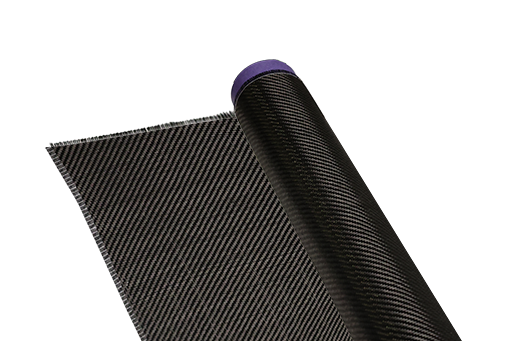
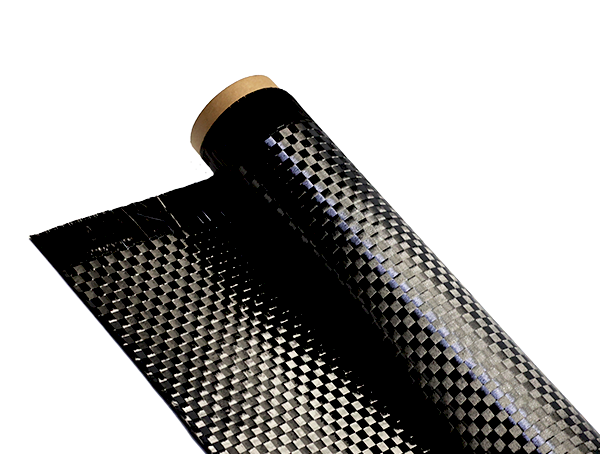
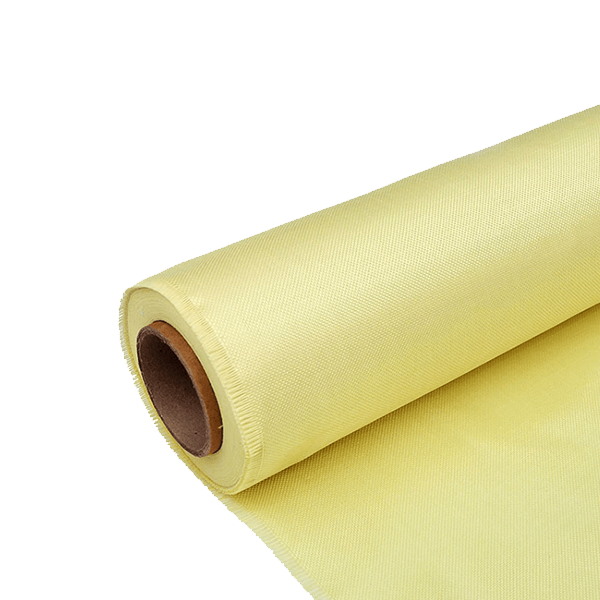
Carbon fiber typically has a dark color and a glossy appearance, while aramid fiber is usually yellow or golden. The physical properties also differ, with carbon fiber being more rigid and aramid fiber offering greater flexibility.
| Property | Carbon Fiber | Aramid Fiber |
|---|---|---|
| Material Composition | Carbon atoms | Aromatic polyamide |
| Manufacturing Process | Pyrolysis | Wet spinning |
| Visual Appearance | Dark, glossy | Yellow/golden |
Understanding these core differences is vital for selecting the appropriate material for specific applications, ensuring optimal performance and durability.
Mechanical Properties: Head-to-Head Comparison
Carbon fiber and aramid fiber are both renowned for their exceptional mechanical properties, but they exhibit distinct differences. Understanding these differences is crucial for selecting the right material for high-stress applications.
Tensile Strength Analysis
Tensile strength is a critical measure of a material’s ability to withstand stretching forces. Carbon fiber typically exhibits higher tensile strength compared to aramid fiber. For instance, high-modulus carbon fibers can achieve tensile strengths exceeding 7 GPa, while aramid fibers generally range between 3.6 to 4.1 GPa.
| Material | Tensile Strength (GPa) | Compressive Strength (MPa) |
|---|---|---|
| Carbon Fiber | 7+ | 600-1000 |
| Aramid Fiber | 3.6-4.1 | 200-400 |
Compressive Strength Performance
Compressive strength measures a material’s ability to resist compressive forces. Carbon fiber generally outperforms aramid fiber in this aspect, with some carbon fiber composites achieving compressive strengths over 1 GPa.
Flexural Properties and Limitations
Flexural properties indicate how a material behaves under bending loads. Carbon fiber composites tend to have higher flexural strength and stiffness compared to aramid fiber composites, making them suitable for applications requiring high rigidity.
Impact and Shock Resistance
Aramid fiber is known for its excellent impact resistance due to its high strain-to-failure ratio. It absorbs impact energy effectively, making it ideal for ballistic protection applications. Carbon fiber, while strong, is more brittle and less tolerant of impact damage.
In conclusion, both carbon fiber and aramid fiber have unique mechanical properties that make them suitable for different types of high-stress applications. By understanding these properties, engineers can make informed decisions when selecting materials for their specific needs.
Weight Considerations and Specific Strength
The weight considerations of advanced materials like carbon fiber and aramid fiber play a significant role in their selection for high-performance applications. When engineers are tasked with designing components for high-stress environments, understanding the density and strength-to-weight ratio of these materials is crucial.
Density Comparison
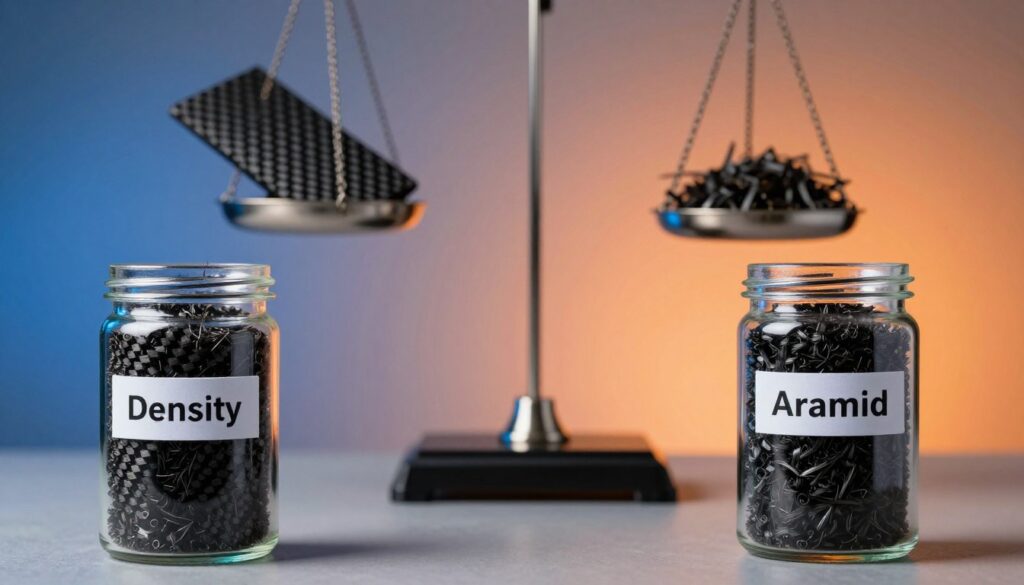
Carbon fiber typically has a lower density compared to aramid fiber. The density of carbon fiber ranges from 1.8 to 2.2 g/cm³, whereas aramid fiber has a density of around 1.44 g/cm³ for some types, but generally averages at 1.8 g/cm³ for Kevlar. This difference in density affects the overall weight of the final product.
Strength-to-Weight Ratios
The strength-to-weight ratio is a critical metric for evaluating the efficiency of a material in high-stress applications. Carbon fiber excels in this regard, offering a high strength-to-weight ratio that makes it ideal for weight-sensitive applications. Aramid fiber, while having a good strength-to-weight ratio, generally does not match that of carbon fiber.
Weight Savings Potential by Application
In applications such as aerospace and automotive, where weight reduction directly translates to improved fuel efficiency and performance, both carbon fiber and aramid fiber offer significant weight savings potential. For instance, using carbon fiber in aircraft components can lead to substantial reductions in overall weight, enhancing the aircraft’s efficiency.
In conclusion, when considering weight considerations and specific strength, carbon fiber generally offers advantages over aramid fiber due to its superior strength-to-weight ratio and lower density in many applications.
Environmental Durability Factors
The ability of a material to withstand environmental factors is a key consideration in high-performance applications. Both carbon fiber and aramid fiber are used in demanding environments, but their durability under various conditions can differ significantly.
UV and Weather Resistance
Aramid fibers are known to degrade when exposed to UV light, losing their mechanical properties over time. In contrast, carbon fibers are generally more resistant to UV degradation, although the matrix material used in carbon fiber composites can affect overall UV resistance.
Chemical Exposure Performance
Carbon fibers are inert to most chemicals, making them suitable for applications involving chemical exposure. Aramid fibers, while resistant to some chemicals, can be affected by strong acids and bases.
Temperature Range Capabilities
Both materials have high-temperature resistance, but carbon fiber composites can maintain their properties at higher temperatures compared to aramid fiber composites.
Fire Resistance Properties
Aramid fibers have inherent fire resistance, with some maintaining their integrity even when exposed to flames. Carbon fibers also exhibit fire resistance, but the overall performance depends on the composite matrix.
| Property | Carbon Fiber | Aramid Fiber |
|---|---|---|
| UV Resistance | High | Low |
| Chemical Resistance | High | Moderate |
| Temperature Range | Very High | High |
| Fire Resistance | High | High |
Cost Analysis: Investment vs. Performance
The economic viability of using carbon fiber or aramid fiber in demanding environments hinges on a thorough cost analysis.
Raw Material Cost Comparison
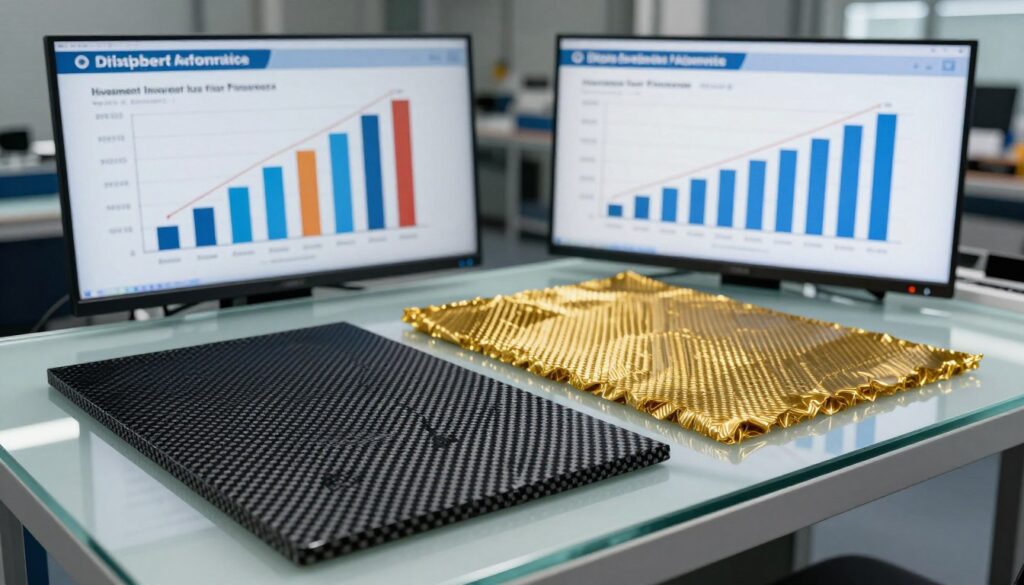
The initial cost of raw materials is a significant factor in the overall cost analysis. Carbon fiber tends to be more expensive than aramid fiber due to its complex production process and high-quality precursor materials. For instance, the price of carbon fiber can range from $20 to $40 per pound, whereas aramid fiber can cost between $10 to $20 per pound. However, the cost can fluctuate based on the specific grade, quantity, and supplier.
Processing and Fabrication Expenses
Processing and fabrication costs can significantly impact the overall expense of using these materials. Carbon fiber often requires specialized equipment and labor, increasing its overall cost. In contrast, aramid fiber can be processed using more conventional methods, potentially reducing fabrication expenses. A detailed comparison of these costs is essential for an accurate cost analysis.
Lifecycle Cost Considerations
Lifecycle costs, including maintenance, repair, and replacement, play a crucial role in the total cost of ownership. Carbon fiber composites, while initially more expensive, may offer longer service life and reduced maintenance needs, potentially lowering lifecycle costs. Conversely, aramid fiber might require more frequent replacements, affecting its overall cost-effectiveness.
Value Engineering Approaches
Value engineering involves optimizing the material selection and design to achieve the best possible performance at the lowest cost. By analyzing the cost-performance ratio, engineers can make informed decisions about whether to use carbon fiber or aramid fiber. This approach ensures that the chosen material meets the application’s requirements while minimizing unnecessary expenses.
Carbon Fiber Applications: Where It Excels
With its unique combination of high stiffness, strength, and low weight, carbon fiber is the material of choice for demanding applications. Its versatility and performance have led to its widespread adoption across various industries.
Aerospace and Aviation
In the aerospace sector, carbon fiber is used to manufacture lightweight aircraft components, reducing fuel consumption and increasing efficiency. The Boeing 787 Dreamliner, for example, features extensive use of carbon fiber composites in its airframe.
Automotive and Racing
The automotive industry, particularly in racing, has embraced carbon fiber for its exceptional strength-to-weight ratio. Formula 1 cars, for instance, utilize carbon fiber to create chassis and bodywork that are both strong and lightweight.
Sporting Equipment
Carbon fiber is also prevalent in sporting goods, such as bicycle frames, golf clubs, and tennis rackets. Its high stiffness and low weight enhance performance and durability.
Industrial Applications
Beyond consumer products, carbon fiber is used in various industrial applications, including wind turbine blades and high-performance machinery components. Its resistance to fatigue and corrosion makes it ideal for these demanding environments.
| Industry | Application | Benefits |
|---|---|---|
| Aerospace | Aircraft components | Reduced weight, increased fuel efficiency |
| Automotive | Racing car chassis and bodywork | Enhanced strength-to-weight ratio |
| Sporting Goods | Bicycle frames, golf clubs | Improved performance, durability |
| Industrial | Wind turbine blades, machinery components | Resistance to fatigue, corrosion |
Aramid Fiber Applications: Optimal Use Cases
Aramid fiber’s versatility is showcased in its diverse applications, from protective gear to advanced industrial uses. Its unique combination of strength, heat resistance, and chemical stability makes it an ideal material for various high-stress environments.
Ballistic and Impact Protection
One of the most significant applications of aramid fiber is in ballistic and impact protection. It is widely used in the manufacture of bulletproof vests, helmets, and other personal protective equipment (PPE) for military, law enforcement, and security personnel. The fiber’s high tensile strength and ability to absorb impact make it highly effective in stopping projectiles and reducing the risk of injury.
Marine and Nautical Uses
Aramid fiber is also utilized in marine and nautical applications due to its resistance to degradation from seawater and its high strength-to-weight ratio. It is used in the construction of high-performance sailboats and other marine vessels where weight reduction and durability are critical.
Telecommunications Infrastructure
In the telecommunications sector, aramid fiber is used to reinforce fiber optic cables, providing strength and protection against environmental stresses. This application is crucial for maintaining the integrity and reliability of telecommunications networks.
Heat and Cut Resistant Equipment
Aramid fiber’s heat resistance and cut resistance make it an essential material in the production of protective gloves, sleeves, and other equipment for workers in high-risk industries such as metal processing and glass handling. These products help prevent injuries from heat and sharp edges.
In conclusion, aramid fiber’s diverse applications underscore its value as a high-performance material. Its unique properties make it indispensable in a wide range of industries, from defense and security to telecommunications and industrial manufacturing.
Decision Framework: Selecting Between Carbon Fiber and Aramid Fiber
The decision to use carbon fiber or aramid fiber hinges on a thorough analysis of application-specific requirements and environmental factors. When evaluating materials for high-stress applications, it’s crucial to consider multiple factors that influence performance and durability.
Application-Specific Requirements Analysis
Understanding the specific demands of your application is paramount. This includes assessing the required mechanical properties, such as tensile strength, compressive strength, and flexural properties. For instance, applications requiring high stiffness and resistance to deformation may favor carbon fiber, while those needing high impact resistance might prefer aramid fiber.
Environmental Exposure Assessment
Environmental factors such as UV exposure, chemical resistance, and temperature fluctuations play a significant role in material degradation. Aramid fibers, for example, are known to degrade under UV light, necessitating additional protective measures.
Budget and Economic Constraints
Cost is a critical factor in material selection. Carbon fiber, while offering superior mechanical properties, is generally more expensive than aramid fiber. A thorough cost-benefit analysis is essential to determine the most economically viable option.
Manufacturing Method Compatibility
The choice of manufacturing process can significantly impact the final product’s performance. Considerations include:
- Molding techniques and their compatibility with the chosen fiber
- Joining and assembly methods that preserve material integrity
Molding Considerations
The molding process for carbon fiber and aramid fiber composites differs due to their distinct material properties. For example, carbon fiber often requires higher pressures and temperatures.
Joining and Assembly Factors
Effective joining and assembly techniques are crucial to maintaining the structural integrity of composite parts. Adhesive bonding and mechanical fastening are common methods, each with its advantages and limitations.
By carefully evaluating these factors, engineers and designers can make informed decisions that balance performance, cost, and manufacturability. The decision framework outlined above provides a structured approach to selecting between carbon fiber and aramid fiber for high-stress applications.
Hybrid Solutions and Emerging Technologies
The development of hybrid composites and next-generation fibers is revolutionizing the field of advanced materials. As industries continue to demand higher performance and more versatile materials, the trend towards hybrid solutions is gaining momentum.
One of the most promising areas of research is in Carbon-Aramid Hybrid Composites. By combining the benefits of carbon fiber and aramid fiber, these hybrids offer a unique blend of properties that can be tailored to specific applications.
Carbon-Aramid Hybrid Composites
Carbon-aramid hybrids leverage the tensile strength and impact resistance of aramid fibers with the high stiffness and strength-to-weight ratio of carbon fibers. This results in composites that are not only strong and lightweight but also capable of withstanding extreme conditions.
| Property | Carbon Fiber | Aramid Fiber | Carbon-Aramid Hybrid |
|---|---|---|---|
| Tensile Strength | High | Very High | Very High |
| Impact Resistance | Low | High | High |
| Stiffness | Very High | Moderate | High |
Next-Generation Fiber Developments
The ongoing research into next-generation fibers is focused on enhancing properties such as strength, durability, and resistance to environmental factors. These advancements are expected to further expand the potential applications of advanced composites.
Innovative application trends are also on the rise, with industries such as aerospace, automotive, and energy exploring new ways to utilize hybrid materials and emerging technologies.
Innovative Application Trends
As hybrid solutions and next-generation fibers become more prevalent, we can expect to see innovative applications across various sectors. For instance, the use of carbon-aramid hybrids in aerospace could lead to lighter, more durable aircraft components.
Conclusion: Making the Optimal Material Choice for Your High-Stress Application
Selecting the right material for high-stress applications is crucial for ensuring the performance, safety, and durability of the final product. The comparison between carbon fiber and aramid fiber highlights the unique strengths and limitations of each material.
Carbon fiber excels in applications requiring high stiffness, tensile strength, and resistance to compressive forces. In contrast, aramid fiber offers superior impact resistance, flexibility, and durability in harsh environments. The optimal material choice depends on the specific requirements of the application, including mechanical properties, environmental exposure, and cost considerations.
By understanding the characteristics of carbon fiber and aramid fiber, engineers and designers can make informed decisions to optimize their material selection. Whether it’s aerospace, automotive, or industrial applications, the right material choice can significantly impact the success of the project. As technology advances, hybrid solutions and emerging materials will continue to expand the possibilities for high-performance applications.
FAQ
What are the primary differences between carbon fiber and aramid fiber?
Carbon fiber is known for its high stiffness, strength, and resistance to fatigue, while aramid fiber is recognized for its toughness, resistance to impact, and ability to withstand high temperatures.
How do the manufacturing processes of carbon fiber and aramid fiber compare?
Carbon fiber is typically produced through a high-temperature process involving the pyrolysis of precursor materials, whereas aramid fiber is manufactured through a chemical reaction that results in a highly oriented molecular structure.
Which material is more suitable for applications requiring high tensile strength?
Both carbon fiber and aramid fiber exhibit high tensile strength, but carbon fiber generally has a higher tensile strength, making it more suitable for applications where this property is critical.
Are there any specific environmental conditions that affect the durability of carbon fiber and aramid fiber?
Yes, both materials have different responses to environmental conditions. Carbon fiber is generally resistant to chemicals and temperature fluctuations, while aramid fiber can be susceptible to degradation from UV exposure and certain chemicals.
How do the costs of carbon fiber and aramid fiber compare?
The cost of carbon fiber is generally higher than that of aramid fiber, primarily due to the complex manufacturing process involved in producing carbon fiber.
Can carbon fiber and aramid fiber be used together in hybrid composites?
Yes, carbon-aramid hybrid composites are used to leverage the benefits of both materials, combining the high stiffness and strength of carbon fiber with the toughness and impact resistance of aramid fiber.
What are some of the key applications for carbon fiber?
Carbon fiber is commonly used in aerospace, automotive, and sporting goods applications, where its high strength-to-weight ratio and resistance to fatigue are particularly valuable.
What are the typical applications for aramid fiber?
Aramid fiber is often used in ballistic protection, marine applications, and for making heat-resistant equipment, due to its toughness, resistance to impact, and thermal stability.
How do I decide between carbon fiber and aramid fiber for my specific application?
The decision should be based on a thorough analysis of your application’s requirements, including the necessary mechanical properties, environmental conditions, budget constraints, and manufacturing considerations.

Keep up with Impact news!
Stay informed, stay inspired with our new blogs.