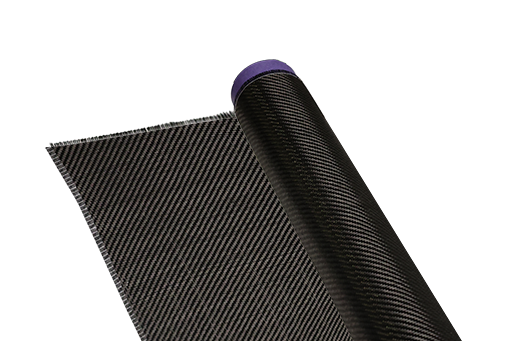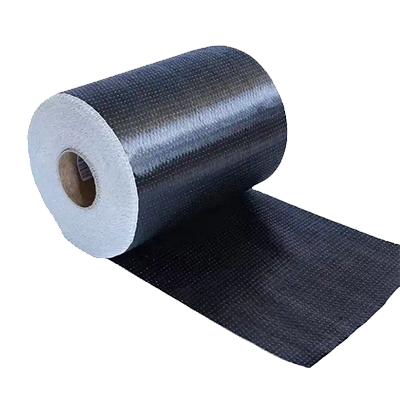
Aramid vs. UHMWPE Plates: The Science Behind Ballistic Test Results
When it comes to ballistic protection, the materials used in body armor are crucial. Two prominent materials used in ballistic plates are Aramid and UHMWPE. Understanding the differences between them is essential for evaluating their effectiveness in various scenarios.
The science behind ballistic test results reveals that the protective capabilities of these materials depend on their unique properties. Ballistic protection is not just about stopping projectiles; it’s about understanding how different materials respond to impact.
As we delve into the details, it becomes clear that both Aramid and UHMWPE plates have their strengths and weaknesses. The key lies in understanding these differences to make informed decisions about body armor.
Key Takeaways
- Aramid and UHMWPE are two distinct materials used in ballistic plates.
- Their protective capabilities are determined by their unique properties.
- Understanding these differences is crucial for evaluating their effectiveness.
- Ballistic protection involves more than just stopping projectiles.
- The choice between Aramid and UHMWPE plates depends on specific needs and scenarios.
The Science of Ballistic Protection
The effectiveness of ballistic protection is rooted in its ability to absorb and dissipate kinetic energy. When a projectile hits a ballistic material, the energy is transferred to the material, which then works to dissipate this energy across its structure to prevent penetration.
Energy Transfer and Dissipation Principles
The principle behind energy transfer in ballistic materials involves the distribution of the kinetic energy of the projectile across the material’s molecular or fiber structure. Materials like Aramid and UHMWPE are designed to maximize this energy dissipation, thereby reducing the impact on the wearer.
NIJ Protection Levels and Testing Standards
The NIJ standards play a crucial role in defining the levels of ballistic protection. These standards categorize body armor into different levels based on their ability to stop various types of ammunition. Understanding these standards is essential for evaluating the effectiveness of Aramid and UHMWPE plates in real-world scenarios.
By adhering to these standards, manufacturers can ensure their products provide reliable ballistic protection. The testing protocols involve rigorous evaluation of the material’s performance against specific threats, providing a clear measure of their protective capabilities.
Aramid Plates: Composition and Properties
In the realm of ballistic protection, aramid plates stand out due to their unique composition and properties. Aramid fibers, the core material in these plates, are renowned for their exceptional strength, heat resistance, and ability to absorb and dissipate energy.
Molecular Structure and Manufacturing Process
The molecular structure of aramid fibers is characterized by rigid, rod-like molecules that are highly aligned. This alignment is crucial for the material’s strength and stiffness. The manufacturing process involves spinning these fibers into yarns, which are then woven or laid up in specific patterns to create the plates. The high crystallinity and strong intermolecular hydrogen bonding in aramid fibers contribute to their outstanding mechanical properties.
Historical Development of Kevlar and Other Aramid Fibers
Kevlar, developed by DuPont in the 1960s, was one of the first commercially successful aramid fibers. Its introduction marked a significant advancement in ballistic protection. Over the years, other aramid fibers like Twaron have been developed, offering similar or enhanced properties. The historical development of these materials has been driven by the need for lighter, stronger, and more effective ballistic protection solutions.
Strength-to-Weight Characteristics
One of the key advantages of aramid plates is their exceptional strength-to-weight ratio. This characteristic allows for the creation of lightweight, wearable ballistic protection that does not compromise on safety. The high tensile strength and low density of aramid fibers make them ideal for applications where both protection and mobility are critical.
UHMWPE Plates: Composition and Properties
UHMWPE, or Ultra-High Molecular Weight Polyethylene, is the material behind some of the most effective ballistic plates available today. Its exceptional strength-to-weight ratio makes it an ideal choice for personal protective equipment.
Polyethylene Molecular Structure
The molecular structure of UHMWPE is characterized by its long, densely packed chains of polyethylene. This structure gives UHMWPE its remarkable properties, including high impact resistance and a low coefficient of friction. As noted by experts, “The unique molecular structure of UHMWPE is what sets it apart from other materials used in ballistic protection.”
Manufacturing Techniques and Innovations
The manufacturing process of UHMWPE plates involves consolidating the material under high pressure and temperature. Recent innovations have focused on improving the consistency and quality of UHMWPE products. Advanced manufacturing techniques have enabled the production of UHMWPE plates with enhanced ballistic performance.
Dyneema and Spectra Technology Advancements
Dyneema and Spectra are two prominent brands of UHMWPE used in ballistic plates. Dyneema, produced by DSM, is known for its exceptional ballistic performance. Spectra, manufactured by Honeywell, offers similar benefits with its own set of technological advancements. As stated in industry reports, “The development of Dyneema and Spectra has significantly raised the bar for ballistic protection materials.”
In conclusion, UHMWPE plates, including those made from Dyneema and Spectra, represent a significant advancement in ballistic protection technology. Their unique composition and properties make them an essential component of modern personal protective equipment.
Aramid vs. UHMWPE Plates: Direct Comparison
Understanding the differences between Aramid and UHMWPE plates is crucial for selecting the right ballistic protection. Both materials have their unique properties that make them suitable for various applications.
Weight and Thickness Differences
One of the primary differences between Aramid and UHMWPE plates is their weight and thickness. UHMWPE plates are generally lighter and thinner than their Aramid counterparts while providing similar or better ballistic protection. For instance, a study comparing the two materials found that UHMWPE plates can be up to 30% lighter.
| Material | Weight (per sq. meter) | Thickness (mm) |
|---|---|---|
| Aramid | 4.5 kg | 6.2 mm |
| UHMWPE | 3.2 kg | 5.5 mm |
Flexibility and Ergonomic Factors
Flexibility is another critical factor where Aramid and UHMWPE plates differ. Aramid plates tend to be more flexible, which can enhance comfort and mobility. However, UHMWPE plates, while less flexible, offer superior ballistic performance. The flexibility of Aramid plates makes them suitable for applications where mobility is a priority.
“The flexibility of body armor is crucial for user comfort and mobility, especially in dynamic environments.” –
Temperature Tolerance Ranges
Both materials have different temperature tolerance ranges. Aramid fibers are known for their high thermal stability, maintaining their properties over a wide temperature range. UHMWPE, on the other hand, has a lower melting point, which can affect its performance in high-temperature environments.
In conclusion, the choice between Aramid and UHMWPE plates depends on the specific requirements of the user, including weight, flexibility, and environmental conditions.
Ballistic Testing Methodologies and Protocols
To evaluate body armor, ballistic testing employs a range of methodologies, from laboratory tests to field simulations. These comprehensive approaches ensure that body armor performs effectively under various conditions.
Laboratory Testing Procedures
Laboratory testing involves controlled experiments to assess body armor’s ballistic resistance. This includes shooting armor samples with specific ammunition types to measure their stopping power and resistance to penetration.
Field Testing and Real-World Simulations
Field testing takes laboratory findings a step further by simulating real-world scenarios. This involves testing body armor in environments that mimic actual use cases, such as law enforcement or military operations.
Data Collection and Analysis Methods
Data collection during ballistic testing is critical for understanding body armor performance. Parameters such as impact velocity, penetration depth, and backface deformation are measured and analyzed to evaluate armor effectiveness.
| Testing Parameter | Laboratory Testing | Field Testing |
|---|---|---|
| Impact Velocity | Controlled ammunition speed | Variable, based on simulation |
| Penetration Depth | Measured against standard backing | Assessed with simulated body materials |
| Backface Deformation | Quantified using calibrated clay | Evaluated for trauma impact |
By combining laboratory and field testing with rigorous data analysis, ballistic testing provides a comprehensive assessment of body armor’s protective capabilities.
Performance Against Different Threat Levels
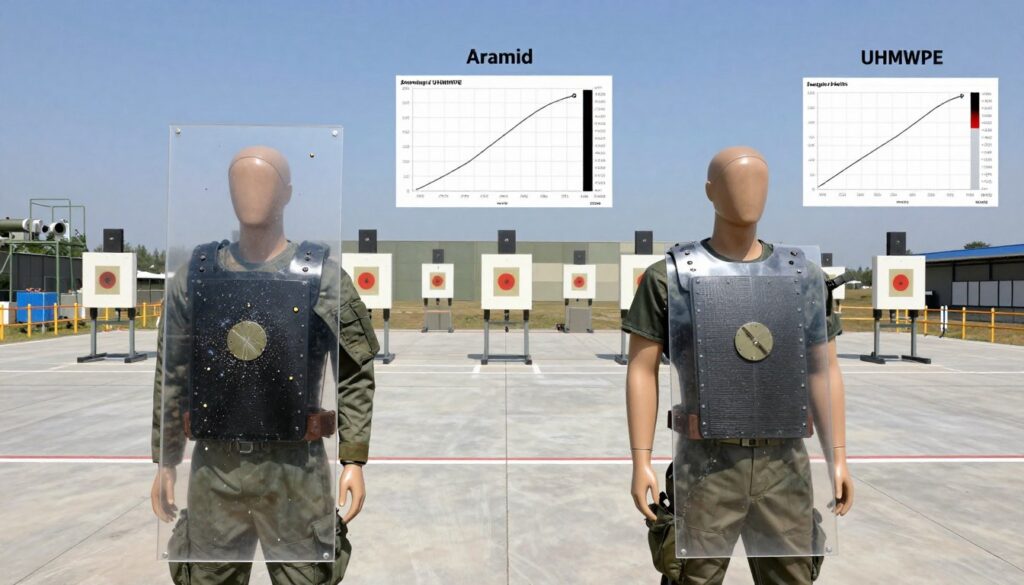
Ballistic test results reveal significant insights into how Aramid and UHMWPE plates perform against handgun and rifle ammunition. These tests are crucial for understanding the capabilities and limitations of each material under various threat conditions.
Handgun Ammunition Test Results
When tested against handgun ammunition, both Aramid and UHMWPE plates demonstrate considerable resistance. Aramid plates, known for their high tensile strength, effectively stop handgun rounds, while UHMWPE plates offer similar protection with potentially less weight.
Rifle Ammunition Test Results
Against rifle ammunition, the performance difference between Aramid and UHMWPE plates becomes more pronounced. UHMWPE plates generally outperform Aramid plates due to their higher hardness and ability to absorb and distribute the impact of rifle rounds more effectively.
Special Threat Testing
Special threat testing, including steel core and green tip ammunition, pushes both materials to their limits. The results show that while both materials have their strengths, UHMWPE plates tend to have an edge in terms of overall performance against these more challenging threats.
| Material | Handgun Ammunition | Rifle Ammunition |
|---|---|---|
| Aramid | Effective | Limited Effectiveness |
| UHMWPE | Effective | Highly Effective |
Backface Deformation and Trauma Analysis
Assessing backface deformation is vital for understanding the trauma mitigation capabilities of different ballistic materials, including aramid and UHMWPE. Backface deformation (BFD) refers to the deformation that occurs on the backside of a ballistic plate when it is hit by a projectile.
BFD Measurement Techniques
Measuring BFD accurately is crucial for evaluating the performance of ballistic plates. Techniques include using clay backing materials to simulate human tissue and measuring the depth of deformation. Standardized testing protocols are essential for ensuring consistency across different tests and manufacturers.
Comparative Trauma Mitigation
Different materials exhibit varying levels of trauma mitigation. Aramid plates, known for their high tensile strength, offer significant protection against certain types of ammunition. In contrast, UHMWPE plates provide excellent multi-hit capability and are often lighter. Comparing these materials involves analyzing their BFD profiles.
Clinical Implications of Different BFD Profiles
The clinical implications of BFD are significant, as they directly relate to the potential for injury. A deeper BFD can result in more severe trauma, including internal injuries. Understanding these implications helps in designing better protective gear and improving wearer safety.
In conclusion, backface deformation and trauma analysis are critical components in the evaluation of ballistic protection materials. By understanding BFD measurement techniques, comparative trauma mitigation, and clinical implications, manufacturers can develop more effective body armor.
Multi-Hit Capability and Failure Modes
Multi-hit capability is a critical factor in determining the reliability of ballistic protection plates. Both aramid and UHMWPE plates are designed to withstand multiple hits, but their performance can vary significantly under different conditions.
Shot Spacing Effects on Integrity
The spacing between shots can significantly affect the integrity of ballistic plates. Aramid plates tend to perform well when shots are spaced farther apart, but their performance degrades when shots are closer together. In contrast, UHMWPE plates have shown better resistance to closely spaced shots due to their unique molecular structure.
Material Degradation Patterns
Material degradation patterns differ between aramid and UHMWPE plates. Aramid plates tend to exhibit a more gradual degradation pattern, with visible signs of damage such as delamination and fiber breakage. UHMWPE plates, on the other hand, may exhibit a more catastrophic failure mode, with sudden and complete failure upon significant impact.
Catastrophic vs. Gradual Failure Characteristics
The failure characteristics of ballistic plates can be categorized into catastrophic and gradual failure modes. A comparative analysis of these failure modes is presented in the table below:
| Material | Failure Mode | Description |
|---|---|---|
| Aramid | Gradual | Delamination, fiber breakage |
| UHMWPE | Catastrophic | Sudden, complete failure |
Environmental Durability Factors
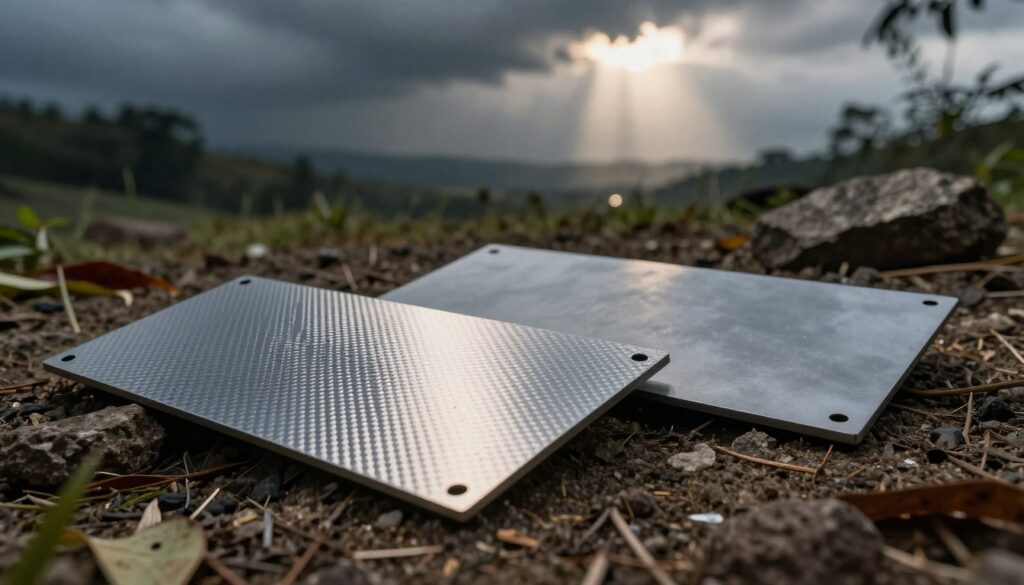
Assessing the environmental durability of ballistic materials is essential for understanding their operational limits. Both Aramid and UHMWPE plates are subjected to various environmental stresses that can impact their performance and longevity.
Temperature Extremes and Performance
Temperature extremes can significantly affect the ballistic performance of both Aramid and UHMWPE plates. Aramid fibers tend to degrade when exposed to high temperatures, potentially losing their tensile strength. In contrast, UHMWPE plates are generally more resistant to temperature variations but can still suffer from degradation under extreme conditions.
Moisture, UV, and Chemical Exposure Effects
Exposure to moisture, UV radiation, and chemicals can also impact the durability of ballistic plates. Aramid fibers are known to absorb moisture, which can affect their ballistic properties. UHMWPE, on the other hand, is more resistant to moisture but can be degraded by prolonged UV exposure. Chemical exposure can lead to material degradation in both types of plates, emphasizing the need for protective coatings or treatments.
Aging and Shelf Life Considerations
The aging process and shelf life of ballistic plates are critical factors in their overall environmental durability. Manufacturers often specify shelf life based on storage conditions. Regular inspection and maintenance are crucial to ensure that the plates remain effective over their intended lifespan. Aging can lead to a gradual decline in performance, making it essential to monitor the condition of the plates regularly.
In conclusion, understanding the environmental durability factors of Aramid and UHMWPE plates is vital for their effective deployment. By considering temperature extremes, exposure to various elements, and aging, users can better assess the long-term viability of their ballistic protection.
Cost-Benefit Analysis and Market Trends
When evaluating ballistic protection materials, a thorough cost-benefit analysis is essential. This involves examining various factors that influence the overall value proposition of Aramid and UHMWPE plates.
Manufacturing Cost Factors
The production costs of Aramid and UHMWPE plates vary significantly due to differences in raw materials and manufacturing processes. Aramid fibers, such as Kevlar, require complex production techniques, contributing to higher costs. In contrast, UHMWPE plates, made from materials like Dyneema, have seen significant reductions in production costs due to advancements in manufacturing technology.
Lifetime Value Assessment
Assessing the lifetime value of these plates involves considering their durability, maintenance requirements, and performance over time. UHMWPE plates generally offer a longer lifespan and better resistance to environmental degradation, potentially justifying higher upfront costs. In contrast, Aramid plates may require more frequent replacement but are often preferred for their flexibility and comfort.
Industry Innovation Directions
The ballistic protection industry is witnessing significant innovations aimed at improving material performance while reducing costs. Trends include the development of hybrid materials and advancements in manufacturing techniques. As the industry continues to evolve, understanding these trends is crucial for stakeholders to make informed decisions.
Practical Applications and User Considerations
The practical applications of Aramid and UHMWPE plates are crucial in determining their effectiveness in real-world scenarios. Both materials have unique properties that make them suitable for different uses.
Military and Law Enforcement Usage Patterns
Military and law enforcement personnel often require ballistic plates that offer both protection and mobility. UHMWPE plates are frequently chosen for their lightweight and high ballistic performance. For instance, the U.S. military has adopted UHMWPE-based solutions for their personnel due to their superior strength-to-weight ratio.
Civilian Protection Scenarios
Civilians seeking personal protection also benefit from these advanced materials. Aramid plates, known for their flexibility and heat resistance, are often used in civilian body armor. A notable example is the use of Kevlar, a type of Aramid fiber, in protective vests.
Comfort, Mobility, and Deployment Duration
Comfort and mobility are critical factors for users who must wear ballistic plates for extended periods. Ergonomic design and lightweight materials enhance user comfort and allow for greater mobility. The duration for which a plate can be deployed depends on these factors, as well as the material’s durability.
As highlighted by a veteran law enforcement officer, “The right ballistic plate can mean the difference between life and death, but it also affects our ability to perform our duties effectively.” This underscores the importance of choosing the right material and design for specific needs.
Conclusion
Understanding the differences between Aramid and UHMWPE plates is crucial for selecting the most effective ballistic protection. Both materials have their strengths and weaknesses, as highlighted in the preceding sections.
Aramid plates, such as those made from Kevlar, offer excellent flexibility and are often lighter, making them suitable for various applications, including law enforcement and civilian protection. On the other hand, UHMWPE plates, like Dyneema, provide superior ballistic performance against certain threats and are generally more resistant to environmental factors.
The choice between Aramid and UHMWPE plates depends on specific needs, including the level of protection required, the operational environment, and personal comfort. By considering these factors and understanding the science behind ballistic protection, individuals can make informed decisions about their ballistic protection needs.
In conclusion, the comparison between Aramid and UHMWPE plates underscores the importance of material science in enhancing ballistic protection. As technology advances, it is likely that both materials will continue to evolve, offering even more effective solutions for ballistic protection.
FAQ
What is the main difference between Aramid and UHMWPE plates?
Aramid plates, such as those made from Kevlar, are known for their high tensile strength and heat resistance, while UHMWPE plates, like Dyneema and Spectra, offer exceptional strength-to-weight ratios and resistance to penetration.
How do Aramid and UHMWPE plates perform against different types of ammunition?
Both materials have shown effectiveness against various ammunition types, but their performance can vary. UHMWPE plates tend to perform better against rifle ammunition, while Aramid plates can be effective against handgun rounds.
What are the advantages of using UHMWPE plates over Aramid plates?
UHMWPE plates are generally lighter and more flexible than Aramid plates, making them more comfortable to wear. They also tend to have better multi-hit capability and are more resistant to degradation from environmental factors.
Are Aramid plates still effective in modern ballistic protection?
Yes, Aramid plates remain effective, particularly against handgun ammunition. Their high tensile strength and heat resistance make them a reliable choice for certain applications.
How do manufacturing processes affect the quality of Aramid and UHMWPE plates?
The manufacturing process can significantly impact the quality and performance of both Aramid and UHMWPE plates. Advanced manufacturing techniques can enhance material properties, such as strength and durability.
What role do NIJ protection levels play in evaluating body armor?
NIJ protection levels provide a standardized framework for testing and evaluating body armor. They help ensure that body armor meets specific performance criteria, including ballistic resistance and durability.
Can Aramid and UHMWPE plates be used together in a ballistic protection system?
Yes, some ballistic protection systems combine Aramid and UHMWPE materials to leverage their respective strengths. This can provide a comprehensive solution for various threat levels.
How do environmental factors, such as temperature and moisture, affect the performance of Aramid and UHMWPE plates?
Both materials can be affected by environmental factors, but UHMWPE plates tend to be more resistant to degradation from moisture and UV exposure. Temperature extremes can impact the performance of both materials.
What are the key considerations when selecting between Aramid and UHMWPE plates for practical applications?
When choosing between Aramid and UHMWPE plates, considerations include the intended use, threat level, comfort, mobility, and environmental conditions. Understanding these factors is crucial for selecting the most appropriate material.

Keep up with Impact news!
Stay informed, stay inspired with our new blogs.